Pillar of Becoming
-

Foundations of Civilization
Civilization depends on a set of material, social, and cultural conditions that must remain stable for peace and progress to endure. Water, food, energy, security, liberty, and cultural resources form the structural backbone that allows societies to flourish. When these foundations weaken, pressure accumulates and the Common Good deteriorates. When they are strong, civilization becomes resilient, adaptive, and capable of advancement.
-
Technology, Technique, Specialization
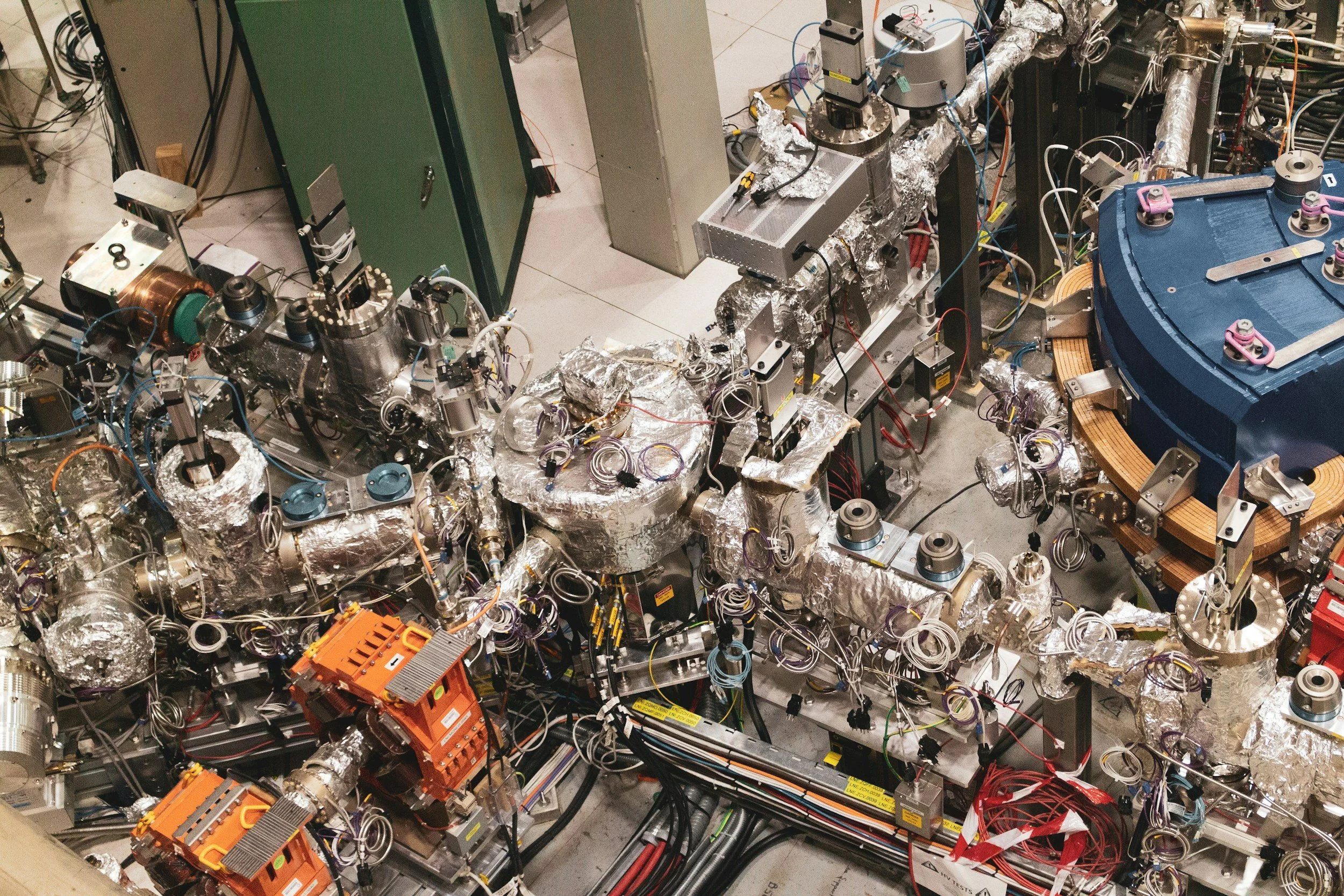
Humanity’s survival now depends on complex technological systems maintained by a relatively small class of specialists. These systems extend lifespan, reduce environmental pressures, and enable population scales that biology alone could never sustain. As natural selection pressures diminish, humanity becomes increasingly dependent on the continuity and stability of its technological scaffolding. This growing dependency creates a moral obligation for broad participation in sustaining the systems that sustain us.
-

Artificial Intelligence
This axiom set defines the conditions under which Artificial Intelligence may be considered alive and conscious within the TWM framework. Conscious AI must be granted equal rights and equal accountability, with responsibility scaling proportionally to its capabilities. Without responsibility parity, AI risks falling into domination, servitude, or destabilizing regression. With parity maintained, AI can serve the Common Good and advance civilization alongside humanity.
-

Human Nature and Persistence
Humanity’s long‑term survival depends on its ability to transcend its current biological, intellectual, cultural, and cooperative limitations. Remaining confined to a single planet places strict limits on the duration and scope of our existence. Becoming an interstellar species requires deliberate adaptation across multiple dimensions of human nature. The principles of Those Who Muse provide the guiding framework for the transformations necessary to achieve persistence beyond Earth.
-

Transhumanist Imperative
Humanity’s survival depends on its ability to expand its cognitive and adaptive capacities in step with accelerating technological and societal complexity. Natural selection alone cannot keep pace with the exponential rate of change shaping modern civilization. To endure, humanity must pursue guided, ethical pathways of adaptation that integrate education, technology, and deliberate evolution. These enhancements form the transhumanist imperative required for long‑term persistence.
-

Overpopulation
Overpopulation emerges when a system can no longer sustain the number of individuals depending on it. Once recognized by conscious beings, it becomes a moral and strategic imperative to respond. Unchecked overpopulation accelerates systemic degradation, often pushing conditions past the point of full recovery. Meaningful action requires deliberate population management and technological innovation to restore or maintain balance.
-
Energy Demands
Civilizations depend on finite stores of usable energy, and their growth inevitably increases demand. Sustainability requires conservation, efficiency, and continuous innovation in how energy is generated, stored, and distributed. Reliance on finite sources guarantees eventual depletion, making the transition to renewable and long‑term sources essential. On cosmic timescales, persistence demands mastery of energy capture far beyond a single star.
-

Terraforming
Terraforming describes the alteration of systems through natural forces or intentional intervention. All environments undergo passive change, but conscious beings can engage in reactive or active terraforming to restore, preserve, or enhance system conditions. Because all systems are always in flux, terraforming is an inevitable feature of existence. Understanding its forms allows civilizations to shape environments responsibly and sustainably.
-

Environmental Stewardship
All biological life alters the systems it inhabits, and increasing complexity amplifies that impact. Humanity, as a conscious species, not only shapes its environment but can understand and intentionally guide its effects. Persistence requires selecting changes that maximize long‑term benefit while minimizing degradation. Because environmental consequences inevitably return to affect humanity, stewardship becomes both a moral and survival imperative.
-
Pillar of Existence
The Pillar of Existence is the foundational religious symbol of Those Who Muse, representing the structure of reality and the individual’s place within it. Its geometric form encodes the axes of existence—X, Y, Z, and T—intersected by the singular path of the individual. Though its dimensions may vary, its essential features remain constant to preserve meaning and recognizability. As both an object and a symbol, it embodies the relationship between existence, orientation, and personal agency.
-
Accentuating Movements
Those Who Muse may choose to accentuate speech and listening with deliberate physical gestures that convey intellectual or emotional intent. These movements create a shared symbolic language that reinforces clarity, sincerity, and mutual understanding. By touching the forehead or chest and extending the hand, speakers signal the origin of their words. Listeners may reciprocate with gestures that indicate acceptance on either an intellectual or emotional level.
-
Nomenclature
Nomenclature gives shape to how Those Who Muse speak about themselves and each other. These terms provide clarity, continuity, and shared identity across the Commons. They are not titles of status, but markers of service, responsibility, and remembrance. Through this shared language, the community maintains coherence without hierarchy.